Materials · 6 min read
By Sybelle Nakhle
Choosing natural stone for everyday living
Why honed finishes, softened edges and a restrained palette make stone feel effortless.
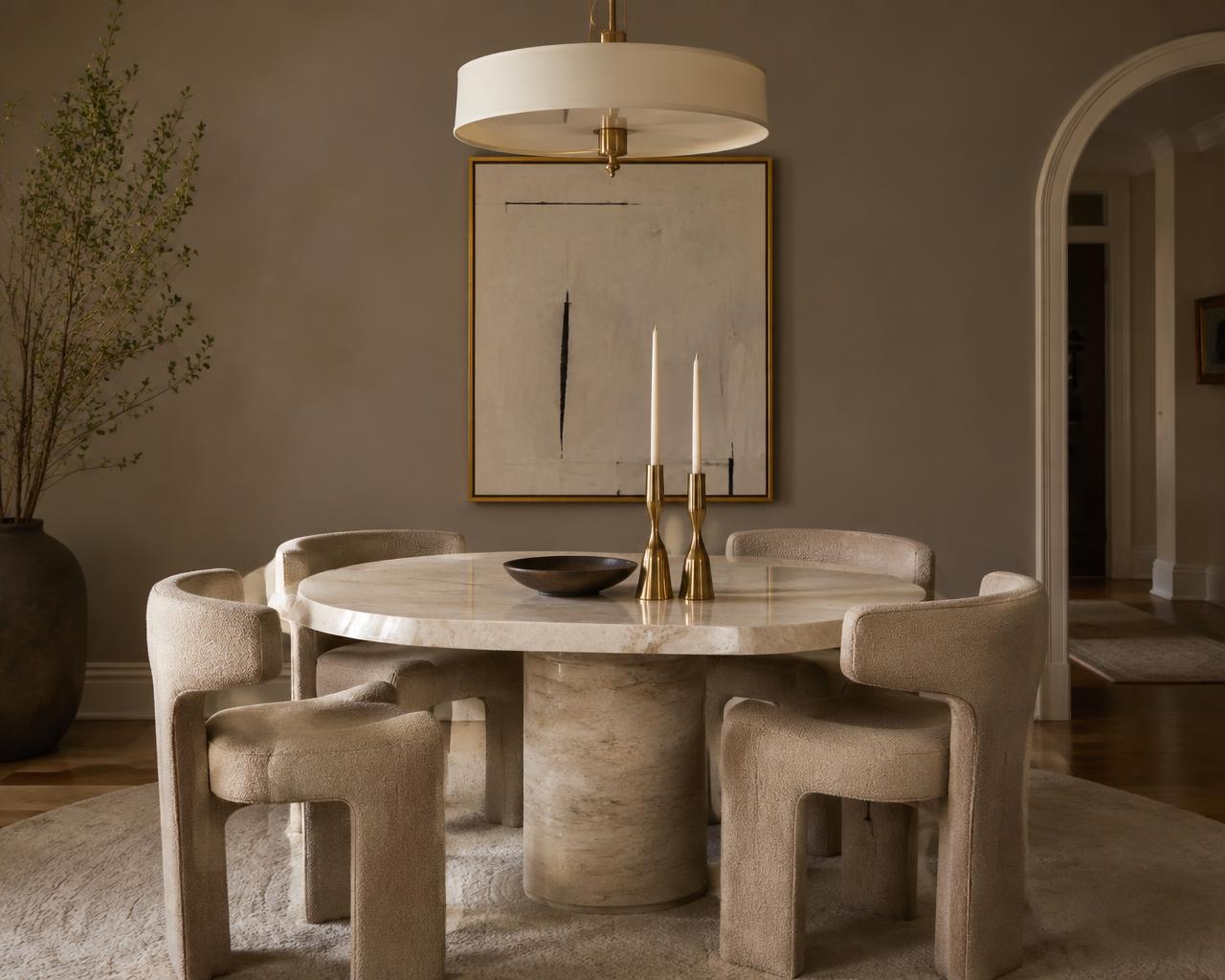
Few materials carry the quiet authority of natural stone. A marble benchtop, a travertine table or a limestone floor brings a sense of permanence that is difficult to imitate. Yet stone is also a living material — porous, variable and responsive to how a home is used. Choosing well is less about finding the most dramatic slab and more about understanding how a stone will age alongside the people who live with it.
Begin with how the room is used
Before looking at colour or veining, consider the daily rhythm of the space. A kitchen benchtop meets lemon juice, wine, hot pans and constant wiping. A bathroom vanity sees water and cosmetics. A coffee table in a living room may only ever hold books and a candle. Each of these asks something different of the material.
Harder, denser stones such as granite and quartzite are generally more forgiving in hard-working kitchens. Marbles and limestones are softer and more reactive to acids; they will etch and soften over time. Neither is right or wrong — but it is worth deciding honestly whether you want a surface that stays pristine or one that gathers a gentle patina.
Why honed often feels more luxurious than polished
A high polish reflects light and shows every mark; on reactive stones, etching appears as dull patches against the shine. A honed finish — smooth but matte — diffuses light, feels soft under the hand and lets wear blend in rather than stand out.
Honed surfaces can be slightly more prone to absorbing stains, so sealing and prompt wiping matter. But for many homes the calmer, tactile character of a honed or lightly brushed finish is what makes stone feel relaxed rather than precious.
Edges, thickness and proportion
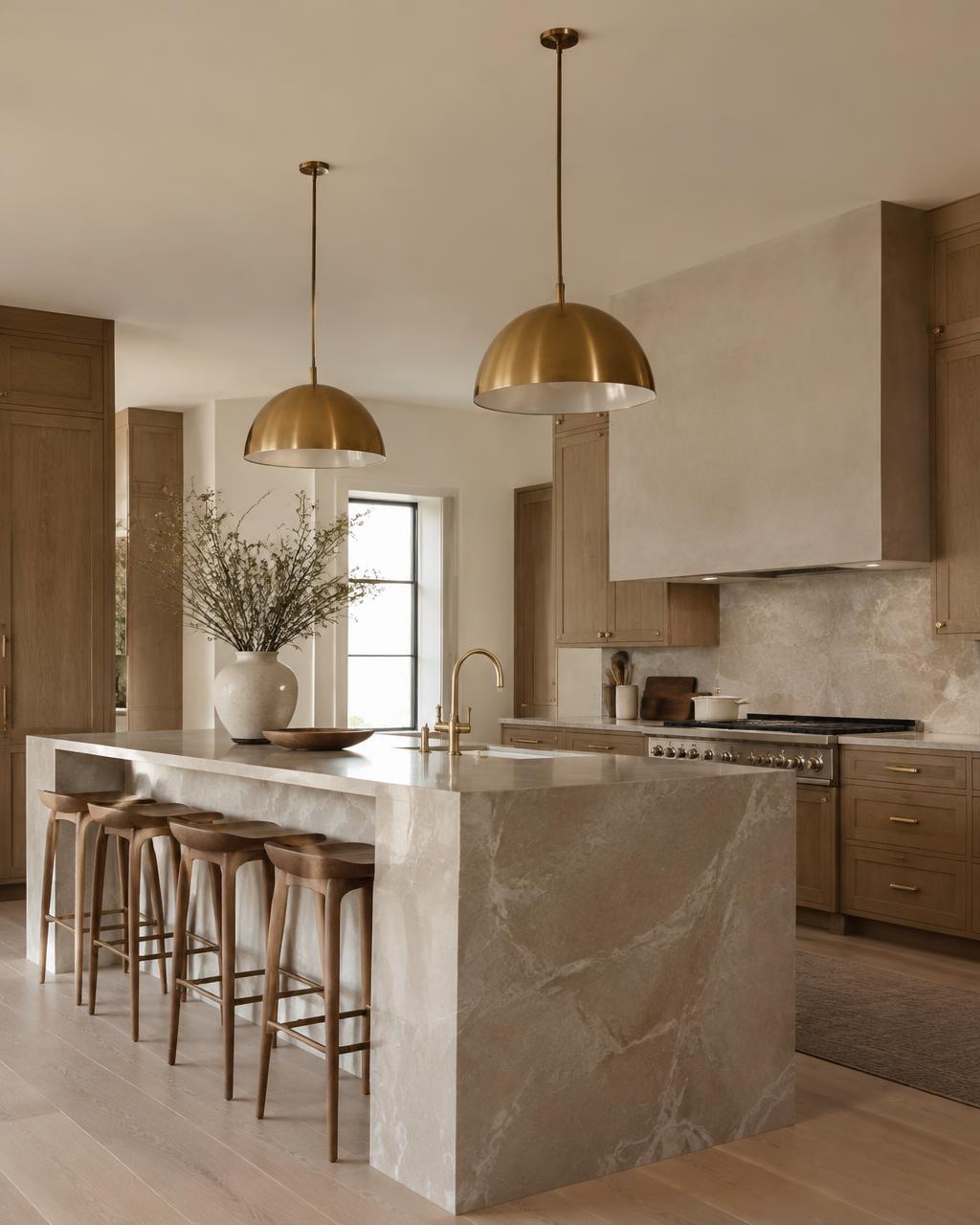
The edge profile changes how a slab reads. A softly eased or gently radiused edge is kinder to hips and elbows, chips less readily than a sharp arris, and lends furniture and joinery an unhurried quality. Mitred edges can make a slab appear thicker and more monolithic, which suits generous islands and tables.
Thickness should relate to the scale of the piece and the room. A slender profile feels refined on a vanity; a substantial one anchors a kitchen island. Ask to see samples of the edge itself, not just the face of the stone.
A restrained palette lets the stone speak
Natural stone already holds movement, tone and texture. When it sits among too many competing materials, that richness is lost. Pairing it with warm timber, linen, plaster-toned walls and a single metal finish lets the stone become the quiet focal point.
Choose the slab in person wherever possible. Stone varies from block to block, and the sample in a showroom may differ from the slab delivered. Seeing the actual slab — and agreeing how the veining will be placed — avoids surprises.
Living with it
Ask your supplier or fabricator about the appropriate sealer and how often it should be reapplied. Use pH-neutral cleaners, wipe up acidic spills promptly and use boards and trivets. Beyond that, allow the stone to be lived with. The faint marks of everyday life are part of what gives natural materials their warmth.
Chosen with care, natural stone is not a material to tiptoe around. It is one to enjoy daily — at breakfast, in the bath, beneath a stack of favourite books — becoming more personal with every year it spends in your home.